Best VPN Services 2026: 5 Top VPNs Compared
If you want the best VPN services 2026 shortlist without reading through ten near-identical recommendations, start with these five. NordVPN is our best overall...


In this story
If you want the best VPN services 2026 shortlist without reading through ten near-identical recommendations, start with these five. NordVPN is our best overall pick for its balance of privacy evidence, performance, streaming reliability, and usability. Surfshark is better for households that need unlimited simultaneous connections, Proton VPN is the strongest privacy-first choice, ExpressVPN is especially easy to use and well suited to streaming, and Mullvad has the clearest long-term pricing.
The right VPN depends less on which provider has the biggest feature list and more on what you value: privacy, streaming, device count, contract flexibility, or long-term cost.
Pricing verified: October 22, 2026. Promotions, taxes, and checkout terms can change.
Best VPN Services in 2026: Quick Comparison
VPN | Best for | Introductory offer | Renewal | Connections | Main advantage | Main limitation |
NordVPN | Best overall | $3.49/mo equivalent; $94.23 upfront for 27 months | $139.08/year | 10 | Strongest all-round balance | Large renewal increase |
Surfshark | Best cheap VPN / households | $2.49/mo equivalent; $67.23 upfront for 27 months | Annual; exact amount should be confirmed at checkout | Unlimited | Excellent value when many devices need coverage | Long-term renewal cost is less transparent |
Proton VPN | Best VPN for privacy | $3.49/mo; $83.76 upfront for 24 months | $83.88/year | 10 | Recurring public no-logs audits | Higher ongoing cost than the intro rate |
ExpressVPN | Streaming / beginners | $2.99/mo equivalent; $83.72 upfront for 28 months | $99.95/year | 10 on Basic | Simple apps and strong independent performance | Renewal is materially higher |
Mullvad | Flexible monthly billing | €5/month | €5/month | 5 | No promotional-price games | Fewer devices; less mainstream streaming focus |
The table separates the advertised monthly equivalent from what you actually pay. NordVPN, Proton VPN, and ExpressVPN publish their current renewal rates; Surfshark states that its two-year plan becomes annually billed but does not display one fixed future Starter renewal amount beside the current promotion. Mullvad charges a flat €5 per month regardless of whether you add one month or much longer.
Read More: What Is VPN Passthrough?
The 5 Best VPN Services of 2026
NordVPN — Best Overall VPN
NordVPN earns the overall recommendation because it has the fewest major compromises across the criteria most buyers care about. It supports 10 simultaneous devices, has recurring independent no-logs assurance work, performs strongly in current third-party testing, and ranks well in recent streaming evaluations.
Its main practical advantage over the other four is breadth. Proton VPN is stronger on public audit transparency, Surfshark is cheaper for device-heavy households, ExpressVPN is simpler, and Mullvad is easier to understand financially. NordVPN is the one that combines privacy evidence, mature apps, advanced features, streaming support, and consistently high performance without being overly specialized.
There is a real downside: value falls after the initial term. The current Basic offer renews at $139.08 per year, far above the introductory monthly equivalent.
Choose NordVPN if: you want one VPN that is competitive across privacy, streaming, speed, and everyday use.
Skip it if: predictable long-term pricing matters more than an all-round feature set.
Surfshark — Best Cheap VPN for Multiple Devices
Surfshark is the strongest best cheap VPN choice here for a household rather than an individual user. The Starter promotion costs $67.23 for the first 27 months and supports unlimited simultaneous devices, so the value improves as more phones, laptops, tablets, and TVs share the subscription.
Its privacy case is more substantial than a marketing claim. Surfshark lists Deloitte no-logs assurance work from 2023 and 2025, plus separate 2026 infrastructure and protocol testing by Cure53. Those are different forms of evidence and should not be treated as interchangeable.
Surfshark’s strongest reason to buy is therefore cost per household, not simply the smallest number in a pricing banner. The limitation is long-term visibility: its public pricing page says two-year plans later renew annually at the applicable renewal rate, but the exact future Starter dollar amount is not presented beside the current offer.
Choose Surfshark if: several people or many devices need VPN coverage.
Skip it if: you want the renewal amount clearly fixed before reaching checkout.
Proton VPN — Best VPN for Privacy
Proton VPN is our best VPN for privacy because its no-logs claims are supported by recurring, publicly accessible external assessments rather than only provider statements.
Its 2026 Securitum review was the fifth consecutive annual audit of Proton VPN’s no-logs infrastructure. The assessment examined whether reviewed VPN servers logged browsing activity, DNS requests, destination services, traffic contents, or user-identifiable connection metadata. Proton links the latest report and its previous annual reports publicly.
That transparency is the clearest reason to choose Proton over NordVPN or ExpressVPN if privacy evidence is your first filter. Proton VPN Plus also supports 10 devices, and its current two-year offer is $83.76 upfront for 24 months before renewing at $83.88 every 12 months.
Independent speed testing is also strong, but speed is not the reason we rank Proton first for privacy.
Choose Proton VPN if: recurring public audit evidence and privacy transparency matter most.
Skip it if: unlimited simultaneous connections or the lowest household cost is more important.
ExpressVPN — Best VPN for Streaming and Beginners
ExpressVPN is the easiest of these five to recommend to someone who wants to install a VPN, choose a location, and get on with using it. Its advantage over NordVPN is not a bigger feature list; it is a simpler product experience combined with strong performance and credible privacy verification.
The Basic plan supports 10 simultaneous devices and currently costs $83.72 for the first 28 months, then $99.95 annually.
KPMG’s 2025 assessment examined ExpressVPN’s VPN servers against its privacy policy and separately evaluated its TrustedServer design and privacy commitments. The report is accessible after accepting KPMG’s terms or through an ExpressVPN account.
For streaming, NordVPN has stronger current evidence as the overall winner, but ExpressVPN remains a sensible alternative for users who prioritize uncomplicated apps and broad device support. Its pricing is the trade-off: the current renewal is much higher than the introductory equivalent.
Choose ExpressVPN if: simplicity and streaming convenience matter more than maximum feature depth.
Skip it if: you are optimizing mainly for long-term cost.
Mullvad — Best VPN for Transparent Monthly Pricing
Mullvad is the easiest provider here to understand financially. It charges €5 per month whether you pay for one month, one year, or much longer. It does not use a deeply discounted two-year headline price followed by a large renewal increase. One account supports up to five devices.
Its account design is also distinctive. Mullvad uses an account number rather than a conventional username-and-password login, and its terms list payment methods including cards, PayPal, bank payment options, cash, vouchers, and several cryptocurrencies.
A 2026 X41 D-Sec audit covered Mullvad’s account and payment API, including authentication, device provisioning, payments, and WireGuard-key distribution. That is useful current security evidence, but it is not the same thing as a 2026 no-logs server audit.
Choose Mullvad if: simple pricing, short commitments, and minimal account design matter most.
Skip it if: you need more than five devices or prioritize mainstream streaming convenience.
Best VPN for Streaming, Gaming, and Everyday Use
Best VPN for Streaming
NordVPN has the strongest current case for best VPN for streaming among these five. TechRadar’s streaming guide, updated September 11, 2026, ranked NordVPN first after hands-on testing, citing quick loading, little buffering, and no VPN-detection warnings during its test process. Proton VPN ranked third in the same guide.
ExpressVPN is a reasonable alternative when ease of setup matters more than winning the latest streaming comparison, while Proton VPN is attractive for users who want stronger privacy transparency alongside streaming support.
No provider can guarantee permanent access to Netflix, Hulu, Disney+, BBC iPlayer, or another platform. Results can change by region, device, server, and time. Use the provider’s refund window to test the services you actually watch.

Best VPN for Gaming
There is no universal best VPN for gaming because latency depends heavily on your route to the game server.
Download speed is only one variable. A closer VPN server can reduce extra routing distance, while a poor route can increase latency even when the VPN posts excellent throughput numbers. VPN routing can occasionally avoid an inefficient ISP route, but it can just as easily add an unnecessary hop.
For gaming, shortlist providers with strong general performance, connect to a nearby VPN location, then compare ping, jitter, and stability against your normal connection. Do this at the times you actually play, preferably within an eligible refund period.
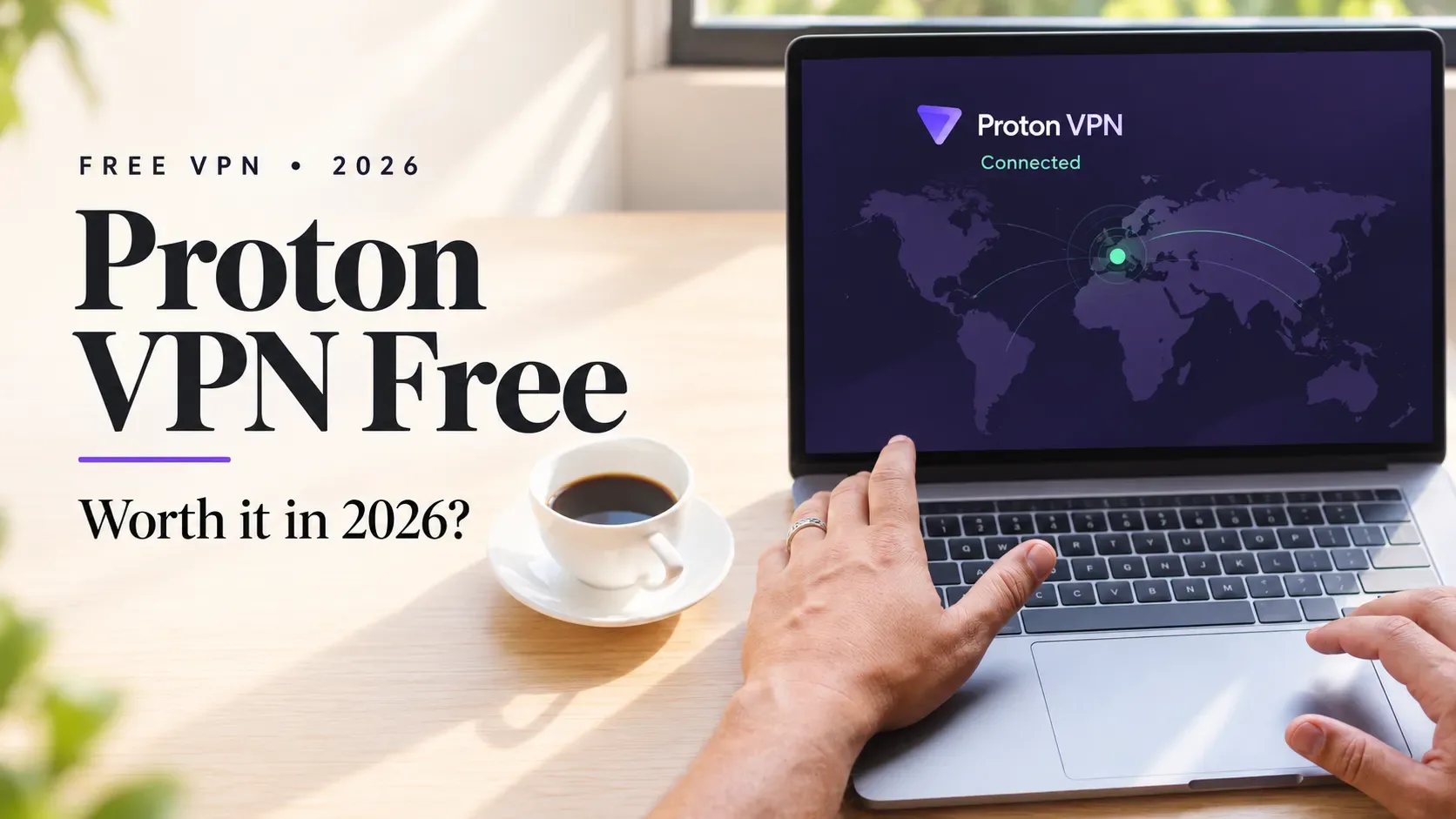
Best Free VPN 2026: Is Proton VPN Free Worth It?
For privacy-focused users, Proton VPN Free is our best free VPN 2026 choice.
It has no data cap, supports one device at a time, and currently connects free users to servers in 10 countries. Proton says server choice is automatically assigned on the free tier, while paid VPN Plus subscribers can choose from the broader network and receive features such as streaming and P2P support.
That makes Proton Free suitable for occasional privacy use and users who cannot justify another subscription. It is less suitable for households, users who need specific server locations, or people buying a VPN mainly for streaming.
The important distinction is that “free” is not a security standard. Unknown free VPNs should be judged on ownership, permissions, privacy policy, and business model rather than being treated as equivalent to an established provider’s limited free tier.
VPN Pricing Compared: Introductory vs Renewal Costs
VPN pricing is easiest to understand when you ignore the giant “per month” number and ask three questions: What leaves my account today? How long does that payment cover? What will the next charge be?
VPN | Initial payment | Initial coverage | Renewal |
NordVPN Basic | $94.23 | 27 months | $139.08/year |
Surfshark Starter | $67.23 | 27 months | Annual; exact applicable price should be checked at checkout |
Proton VPN Plus | $83.76 | 24 months | $83.88/year |
ExpressVPN Basic | $83.72 | 28 months | $99.95/year |
Mullvad | €5 | 1 month | €5/month |
The pricing evidence changes the buying decision. Surfshark has the lowest current long-term upfront payment and unlimited connections, which makes it particularly compelling for households. NordVPN’s first term is attractive, but its published annual renewal is much higher. Proton’s renewal increase is smaller. Mullvad does not offer a promotional discount, but that also means there is no promotional-to-renewal jump.
Do not assume these offers will still exist later. Recheck the checkout page before purchasing.
Which VPN Offers the Best Privacy and Security?
The useful question is not simply whether a VPN says it is “audited.” Different assessments examine different systems.
VPN | Recent relevant evidence | Organization | Main scope |
NordVPN | Sixth no-logs assurance; systems reviewed Nov.–Dec. 2025 | Deloitte Lithuania | Server infrastructure, configurations, deployment processes, no-logs controls |
Proton VPN | 2026 no-logs audit | Securitum | Server-side activity, DNS, traffic, destination, and identifiable connection metadata |
Surfshark | 2025 no-logs assurance | Deloitte | Adherence to no-logs commitments |
ExpressVPN | 2025 privacy assessment | KPMG | VPN servers, TrustedServer, and privacy-policy controls |
Mullvad | 2026 security audit | X41 D-Sec | Account/payment API and supporting backend services |
NordVPN’s sixth assurance was conducted between November 10 and December 12, 2025 and announced in February 2026. Deloitte examined several server types and concluded that the reviewed systems and supporting operations were designed and implemented consistently with NordVPN’s no-logs statement.
Proton’s 2026 Securitum audit is especially useful for readers because Proton publicly links the report and previous annual assessments. Surfshark’s Deloitte report is available through user accounts, while ExpressVPN requires acceptance of KPMG’s access terms or account access for the full report.
Audit scope matters. Mullvad’s 2026 X41 assessment, for example, strengthens confidence in its account/payment systems but should not be presented as current no-logs infrastructure verification.
No audit guarantees future privacy, perfect security, or anonymity. It is evidence about a defined scope at a particular time.
How We Evaluated the Best VPN Providers
We selected these five providers because each has a defensible buyer use case and enough current evidence to evaluate it meaningfully. The shortlist considers verifiable privacy and security evidence, competitive performance, pricing transparency, practical usability, device support, and the availability of reliable third-party research.
We did not exhaustively test every VPN on the market or create a top-ten list simply to make the article longer.
Provider pages were used for plan prices, renewal terms, device limits, and feature claims. Independent assurance reports were used where available for privacy claims. For performance and streaming, we relied on attributed third-party testing rather than treating provider marketing numbers as independent evidence.
We Case Study did not perform original laboratory speed tests, streaming-unblocking tests, kill-switch leak tests, or multi-region latency tests for this guide.
For speed context, TechRadar’s August 2026 benchmark used a 10 Gbps cloud test system. It recorded PrivadoVPN at 2,334 Mbps on its WireGuard benchmark and identified Proton VPN as particularly strong for long-distance performance at 1,548 Mbps. NordVPN’s NordLynx result was 1,249 Mbps. These figures show performance potential under that specific methodology, not what a typical US home connection will receive.
That is why this guide does not declare one permanent “fastest VPN.” Protocol, route, test location, base line speed, device, and congestion all matter.
Are VPN Services Worth It in 2026?
A VPN is worth paying for when it solves a specific problem: reducing what your ISP or local network can directly observe, changing your public IP, using an encrypted tunnel to the VPN endpoint, or connecting through another geographic location.
It does not make you completely anonymous. Websites can still identify you through logins, cookies, browser fingerprinting, payment information, and details you provide.
A VPN also does not replace secure passwords, multi-factor authentication, software updates, or malware protection. HTTPS already encrypts the content of most normal web sessions between your browser and a website; a VPN adds a different layer by encrypting traffic between your device and the VPN server.
For most readers, that makes a VPN useful as one privacy and networking tool—not an all-purpose internet security product.
Frequently Asked Questions
What Is the Best VPN Service in 2026?
NordVPN is our best overall choice because it combines recurring privacy assurance, strong current third-party performance, streaming evidence, mature apps, and support for 10 simultaneous devices. Proton VPN is better for privacy-first buyers, while Surfshark offers better value for households with many devices.
Which VPN Is the Fastest in 2026?
There is no universal fastest VPN. In TechRadar’s August 2026 10 Gbps testing, PrivadoVPN recorded the highest WireGuard result at 2,334 Mbps, while Proton VPN led the publication’s long-distance US-to-UK result at 1,548 Mbps. Different routes, protocols, and test setups can produce different winners.
What Is the Best Cheap VPN?
Surfshark is our best cheap VPN among these five because its current 27-month Starter offer has the lowest upfront long-term payment and covers unlimited simultaneous devices. However, buyers should confirm the annual renewal amount at checkout rather than assuming the introductory rate continues.
Can a VPN Make You Completely Anonymous?
No. A VPN changes your visible IP and alters what your ISP or local network can directly observe, but websites and services can still identify you through account logins, cookies, browser fingerprinting, payments, and other identifiers.
Is a Free VPN Good Enough, or Should You Pay?
A reputable free VPN can be enough for occasional privacy use. Proton VPN Free has no data cap but is limited to one device and restricted server selection. Paying makes more sense if you need multiple devices, broader location choice, streaming support, P2P, or premium features.
Final Verdict: Which VPN Should You Choose?
Choose NordVPN for the strongest overall balance, Proton VPN for privacy transparency, Surfshark for inexpensive multi-device coverage, ExpressVPN for simplicity and streaming convenience, and Mullvad for predictable monthly billing and a minimal account model.
If you need a free option, start with Proton VPN Free.
Before paying, verify the amount charged today, renewal terms, device limit, and refund conditions for the exact plan you are buying.
Sources:
Keep reading
What Is VPN Passthrough and When Should You Enable It?
Learn what VPN passthrough does, when to enable IPsec or PPTP helpers, and how to troubleshoot router VPN connections without changing every setting.