








A prepaid SIM card is a physical SIM card or eSIM profile that lets you use mobile service by paying in advance instead of signing a long-term contract. You usually buy a plan with a set amount of data, calls, texts, or validity days. When the plan runs out, you top up, renew, or let it expire.
Prepaid SIM cards are commonly used by travelers, students, budget-conscious users, temporary phone users, and people who do not want a postpaid contract.
Key Takeaways
- A prepaid SIM card gives you mobile service without a traditional monthly contract.
- You usually pay before using the service, so it can help control spending.
- Prepaid plans may include data, calls, texts, hotspot access, or international roaming, depending on the carrier.
- Your phone must be unlocked and compatible with the carrier’s network.
Some newer phones support eSIM, which can work like a digital prepaid SIM without a removable card. The FCC describes eSIM as built into the phone, while GSMA explains that eSIM enables remote SIM provisioning and can store operator profiles digitally.
Read More:
What Is a Prepaid SIM Card?
A prepaid SIM card is a subscriber identity module connected to a mobile plan you pay for before using. It identifies your device on a mobile network and allows access to services such as mobile data, calls, and text messages.
Unlike postpaid phone plans, prepaid plans typically do not require a long-term service contract. Instead, you choose a plan, pay upfront, activate the SIM, and use the included allowance until it expires or runs out.
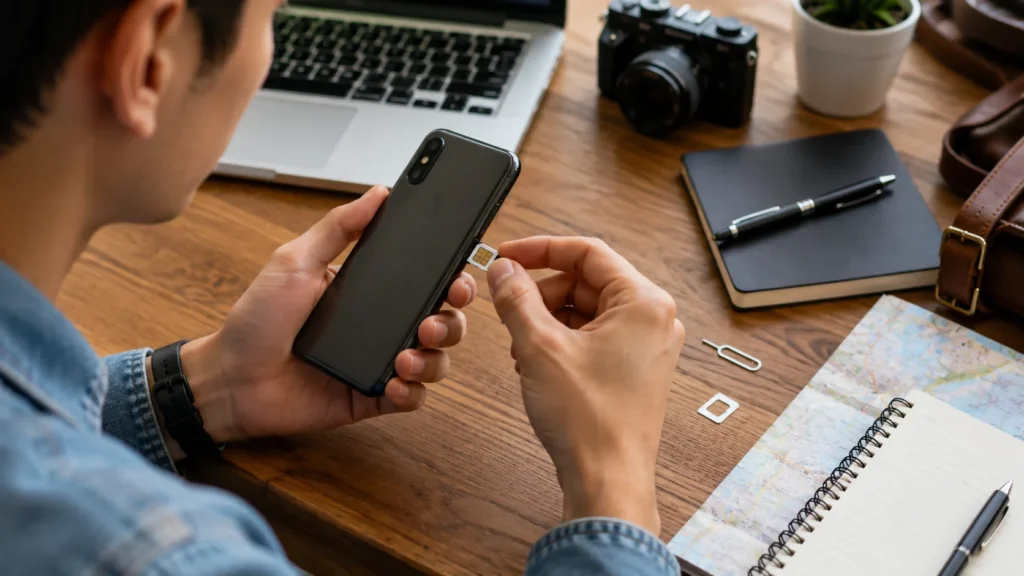
A prepaid SIM card can come in two main forms:
| Type | What It Means | Best For |
| Physical SIM | A removable SIM card inserted into your phone | Phones with SIM trays, simple setup |
| eSIM | A digital SIM profile installed on a compatible device | Travel, dual-line use, newer phones |
How Does a Prepaid SIM Card Work?
A prepaid SIM card works by linking your phone to a mobile carrier’s network. After you buy the SIM and choose a plan, you activate it online, in an app, in a store, or by following the carrier’s instructions.
The plan may include:
- Data allowance, such as 5GB, 20GB, or unlimited data with limits.
- Call minutes.
- Text messages.
- A validity period, such as 7 days, 30 days, or 90 days.
- Optional roaming or international calling.
Once the allowance is used or the validity period ends, the service may stop, slow down, or require a top-up. The exact result depends on the carrier and plan.

Prepaid SIM Card vs Postpaid SIM Card
The main difference is when you pay.
With a prepaid SIM, you pay before using the service. With a postpaid SIM, you usually receive a monthly bill after using the service.
| Feature | Prepaid SIM Card | Postpaid SIM Card |
| Payment timing | Pay before use | Pay after use |
| Contract | Often no long-term contract | May involve contract or billing agreement |
| Credit check | Often not required, but rules vary | More common |
| Spending control | Easier to limit usage | Charges may vary by usage |
| Best for | Travelers, temporary users, budget control | Long-term users, family plans, device financing |
| Device deals | Usually limited | Often more available |
Who Should Use a Prepaid SIM Card?
A prepaid SIM card may be a good fit if you want flexibility, predictable costs, or short-term mobile service.
It is often useful for:
- Travelers visiting another country.
- People who need a temporary phone number.
- Students or short-term residents.
- Users who want to avoid long-term contracts.
- Parents setting up controlled phone service for a child.
- People testing a carrier before switching permanently.
A prepaid SIM may not be the best fit if you need premium support, bundled device financing, family discounts, or consistent international roaming across many countries.
How to Buy a Prepaid SIM Card
You can usually buy a prepaid SIM card from:
- Carrier stores.
- Airport kiosks.
- Electronics shops.
- Convenience stores.
- Online carrier websites.
- Travel eSIM providers.
Before buying, check these details:
- Is your phone unlocked?
- Does your phone support the carrier’s network bands?
- Does the plan include enough data?
- Is hotspot/tethering allowed?
- Does the plan include calls and texts or data only?
- Are taxes, activation fees, or top-up fees added?
- Does the SIM expire if unused?
- Can you renew or cancel easily?
For international travel, the FCC recommends checking roaming options before leaving and notes that using a local SIM may require an unlocked device.
Do You Need an Unlocked Phone?
Usually, yes. If your phone is locked to one carrier, it may not work with another carrier’s prepaid SIM card.
In the United States, the FCC states that carriers generally must unlock prepaid mobile devices upon request no later than one year after initial activation, subject to policy conditions.
This is an important step before buying a prepaid SIM for travel. Even if the SIM plan is valid, it may not work if the phone is carrier-locked or incompatible with the destination network.
What Is a Prepaid eSIM?
A prepaid eSIM is a digital version of a prepaid SIM card. Instead of inserting a plastic card, you install a mobile plan on your phone by scanning a QR code, using an app, or following carrier instructions.
eSIM can be convenient because it may let you keep your main SIM active while adding a second mobile plan. GSMA notes that eSIM technology can allow multiple operator profiles to be stored on one device, although only one may be active for use at a time depending on the device and setup.
Prepaid eSIMs are especially common for international travel because they can often be purchased before departure and activated after arrival.
Benefits of a Prepaid SIM Card
A prepaid SIM card can offer several practical advantages.
Better Cost Control
Because you pay in advance, it is easier to avoid unexpected bills. This can be useful for people who want a fixed mobile budget.
No Long-Term Commitment
Many prepaid plans let you stop using the service without cancellation penalties. This makes prepaid SIMs useful for short trips or temporary needs.
Easy Setup for Travel
A local prepaid SIM or travel eSIM may help reduce roaming costs, depending on the destination and plan. Government travel guidance also notes that travelers can replace their SIM with a local provider’s SIM or use a digital SIM option where supported.
Useful for Testing a Network
A prepaid SIM can help you test coverage, speed, and reliability before switching to a long-term carrier plan.
What to Watch: Risks and Limitations
Prepaid SIM cards are convenient, but they are not perfect.
Coverage Can Vary
A cheap prepaid plan is not useful if the carrier has weak coverage where you live, work, or travel.
“Unlimited” May Still Have Limits
Some unlimited prepaid plans may reduce speed after a certain amount of high-speed data, limit hotspot use, or deprioritize traffic during congestion. Always read the plan details.
Roaming May Be Limited
Not every prepaid SIM supports international roaming. Some prepaid plans work only inside one country.
Activation Rules Differ by Country
Some countries require ID registration before using a SIM card. Requirements vary widely, so travelers should check official local rules before arrival.
Phone Compatibility Matters
Even an unlocked phone may not support every mobile network band. Check compatibility before buying.
Numbers Can Expire
If you do not top up or renew, your prepaid number may be recycled after a period of inactivity. The timing depends on the carrier.

How to Choose the Right Prepaid SIM Card
Use this checklist before buying:
| Question | Why It Matters |
| Is my phone unlocked? | Locked phones may reject another carrier’s SIM |
| Do I need calls, texts, data, or all three? | Some prepaid SIMs are data-only |
| How much data do I need? | Video, maps, hotspot, and social apps can use data quickly |
| How long should the plan last? | Travel plans may last 7, 15, or 30 days |
| Is hotspot included? | Some plans block or limit tethering |
| Is 5G included? | Availability depends on carrier, plan, phone, and location |
| Can I renew online? | Useful for long stays |
| Does it include roaming? | Important for multi-country trips |
FAQs
What is a prepaid SIM card used for?
A prepaid SIM card is used to access mobile data, calls, and texts after paying upfront for a plan. It is commonly used for travel, temporary service, budget control, or avoiding long-term contracts.
Is a prepaid SIM card the same as a regular SIM card?
Technically, the SIM may work similarly, but the billing model is different. A prepaid SIM is connected to a plan you pay for before use, while a postpaid SIM is connected to a plan billed after use.
Can I use a prepaid SIM card in any phone?
Not always. Your phone usually needs to be unlocked and compatible with the carrier’s network. Some phones may also need the correct SIM size or eSIM support.
Does a prepaid SIM card come with a phone number?
Many prepaid SIM cards include a phone number, but some travel eSIMs are data-only and do not include calls or SMS. Check the plan before buying.
Can I keep my number with a prepaid SIM?
In many markets, number porting may be possible, but rules and timing vary by carrier and country. Check with both your current provider and the prepaid carrier.
Is a prepaid SIM card good for international travel?
It can be. A local prepaid SIM or prepaid eSIM may be cheaper than international roaming, but it depends on the country, carrier, data needs, and activation requirements.
What happens when a prepaid SIM runs out?
Your service may stop, slow down, or require a top-up. Some carriers allow automatic renewal, while others require manual payment.
Is prepaid cheaper than postpaid?
Sometimes. Prepaid can be cheaper for light users, travelers, or people who do not need device financing. Postpaid may be better for family plans, premium features, or bundled phone deals.
Conclusion
A prepaid SIM card is a flexible way to get mobile service without committing to a long-term phone contract. You pay upfront, choose a plan, and use the included data, calls, or texts until the plan expires or needs renewal.
The most important things to check are phone unlocking, network compatibility, data limits, roaming rules, activation requirements, and renewal terms. For travelers and budget-conscious users, a prepaid SIM card can be a practical choice, especially when the plan matches the actual usage need.


